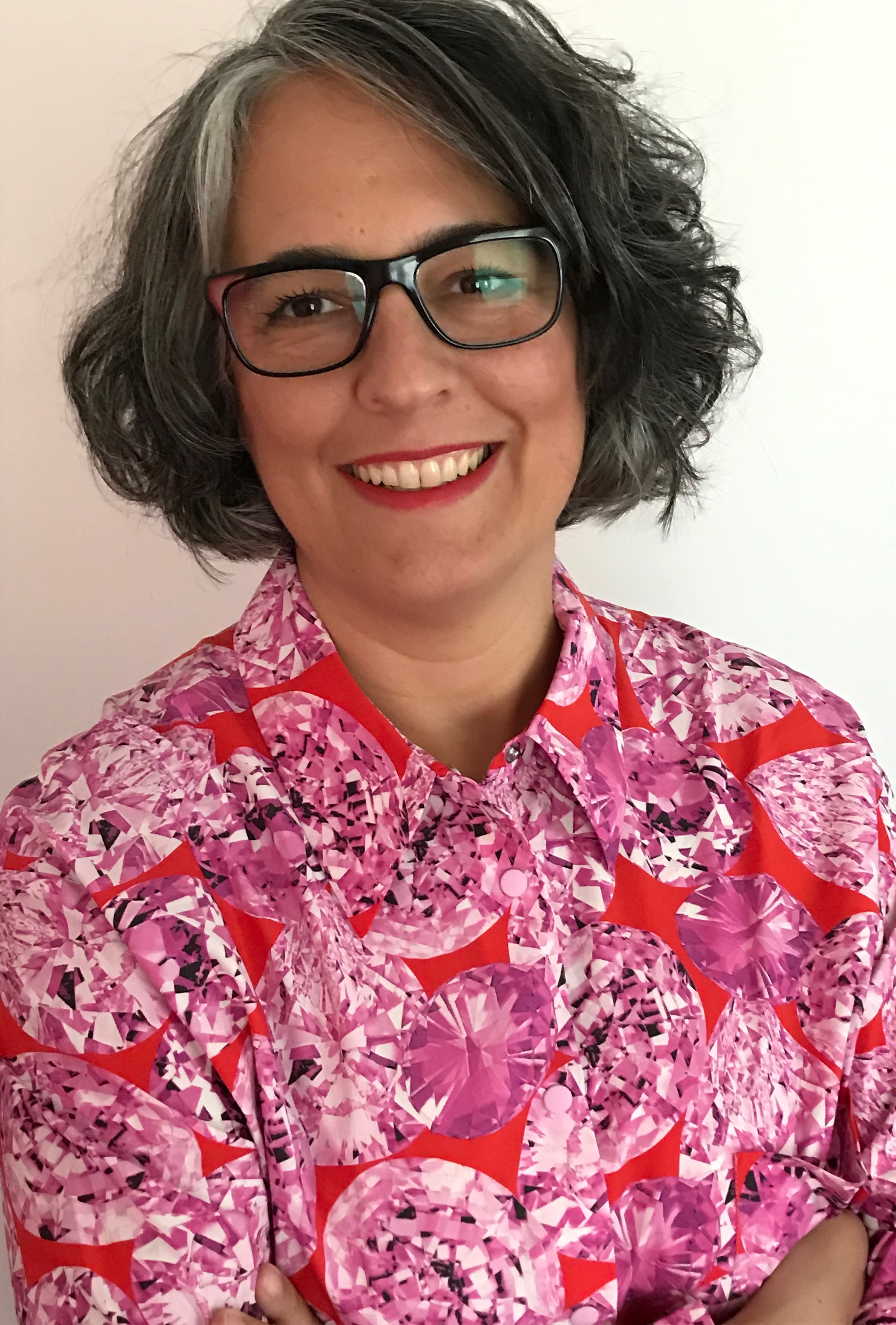
 I am an anthropologist interested in political and legal anthropology, STS, and social studies of finance and economics. I am a faculty member in the Anthropology Department at USC. My work looks at the unexpected ethical and technical entanglements through which experts understand water in Latin America. I am particularly interested in spaces where the law, economics and techno-science are so fused that they appear as one another.
My first book, A Future History of Water (Duke University Press, 2019-you can download the Open Access pdf here) asks how the difference between a human right and a commodity is produced in regulatory and governance spaces that purport to be open to different forms of knowledge and promote flexibility and experimentation. I have worked with regulators, policy-makers, and NGOs in Costa Rica and Brazil where I trace how technolegal devices embody moral distinctions, pose questions about the foundations of liberal capitalist societies, and help people inhabit non-linear and generative futures.
In 2021 I published a co-edited a collection of protocols for creative ethnographic analysis titled Experimenting with Ethnography: A Companion to Analysis. This book builds on my longstanding interest in the power of ethnography as a means for conceptual openness and practical commitment to the worlds we are part of. It is also the result of an orientation to collaboration as praxis, rather than as an object of study. The book also embodies ongoing reflection on the distinct paces that different projects demand. The book can be purchases from Duke University Press and the PDF can be downloaded for free.
I am currently working on a research project that explores how subterranean space is “re-discovered” through remote sensing and legal technologies that transform it into a new planetary frontier. I think about this project as Expanding the Social World Downwards. In Costa Rica, subterranean space has been historically understood as a relatively non-controversial political object. This is changing rapidly. Climate change has brought the underground to the surface; the media, government officials, and everyday citizens increasingly discuss the impending underground water crisis along with questions of value and property that new regulations entail. I am interested in how this re-discovery is at once entwined with and supersedes the legacies of extractivist imaginaries and of property as a fundamental institution of social life. I particularly ponder what happens with law and technology when the extraction of oil and minerals is not the dominant logic for subterranean exploration. Conceptually, this project engages with questions of volumetric spaces, four-dimensional coordenates, and the expectation that in the Anthropocene our material awareness needs to take new forms. In the first publications out of this project I have examined spongy imaginaries and the notion of dissolution as the political and material condition of aquifers. In this talk I share some of my current work on Aquifers, models and volumetric awareness. You can see it here. This project has been supported by Mellon Foundation, NSF, Fulbright, and Wenner Gren Foundation.
I have been recently engaged in three collaborative projects. One resulted in a Special Issue titled What is a Financial Frontier? For that project I wrote about the financial trust, its legal and financial history, and its significance for property regimes around water. A second project, supported by the SSRC, asked how does the future of facts look from Latin America. As part of this project, I published a piece on the relation between fact and consequence in assessing scientific facts about aquifers.
My third collaborative project is an examination of Retooling as a modality of technoscientific change that is particularly meaningful for turbulent times, such as the ones we are living through. We are finishing a framing article that is a starting point for a collaborative NSF project with Christy Spackman (ASU) and Katie Ulrich (USC-Harvard) and will be organizing open panels at 4S during the next few years, please get in touch if this resonates with you and you’d like to join our conversations.
Since 2011, I have devoted significant energy to run the Ethnography Studio, an interdisciplinary experimental space that brings together students interested in the peculiarities of ethnography as a textual form, as a research strategy and as a modality of knowledge production. The Studio is structured as a space where intellectual labor grows out of generosity, rigor, and collaboration. I have recently co-written a short protocol and companion piece thinking about ‘analytic moves’ as a key ethnographic practice in the Studio. You can find the protocol and companion piece here.

 andreaballestero.com